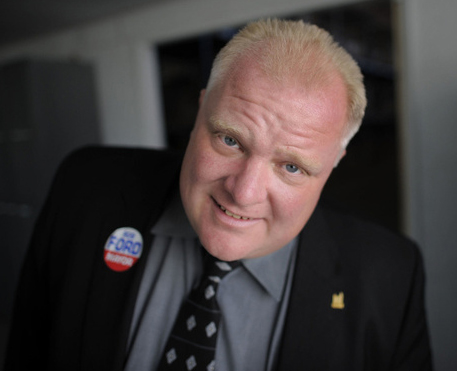
Successful Rob Ford Mayoral campaign: simple, effective, and grassroots
Democracy works by allowing anyone to campaign for a political position, and the person who gets the most votes, gets the position. Apart from a couple of years living in China, this is all I have known. Here in Toronto we have a new mayor who campaigned on the platform of cost and waste reduction. Roughly a third of all councilors were swept out, replaced by fresh faces and ideas. We have “polls” that predict the outcome of the election before election day. These polls are akin to taking the pulse of a patient, an indicator of events to come. Using scientific and statistical analysis one would think that these polls would be quite accurate, but in the case of Toronto’s mayorality race, the polls were very wrong, by a large margin. It turns out that the offline community, those that do not have internet access or those that spend very little time online, threw the polls off, so much so as to question the benefits of polling all together.
Prior to yesterday’s municipal election most polls showed the two front runners with equal strength, too close to definitively predict a winner. This was universal amongst many different polls. The election results differed substantially. Rob Ford won with 47% over George Smitherman’s 36%, an enormous gaping difference of 11% or a third of the votes of the runner up. How is this possible?
EKOS pollster Frank Graves seems to have gotten it right:
Mr. Graves nailed the Toronto race. His last poll – released Sunday, the day before the vote – showed Mr. Ford with 48 per cent support compared to 33 per cent for former Liberal deputy premier George Smitherman.
Other polling had shown the race was too close to call but Mr. Graves was predicting a big win for Mr. Ford. And he was right – the latest tally in the morning newspapers showed Mr. Ford capturing 47 per cent of the vote compared to 36 per cent for Mr. Smitherman.
Mr. Graves notes that Mr. Ford’s surge came late and was missed by some polls. Pollsters sampling through on-line surveys did not pick up on some of Mr. Ford’s strongest supporters: the older, lower and moderate socio-economic voters.
“Most of these are not online,” Mr. Graves explained. “This particular result harshly exposes the problem of ignoring those who aren’t online.”
I find it amusing, as a techologically savvy IT person, when there is such a reliance on technology that they are blinded by it. In this case online polls are the easy way to collect data, but in the end pollsters did not account for those not online. This skewed their results so much as to render their predictions highly inaccurate. We must never lose sight of the goal and always be wary of how technology can take on a life of their own.
All Toronto residents are entitled to vote, be they nerds who live online or those that do not have a computer. I liked Rob Ford’s campaign as it was simple and easy to understand for all: “Stop the Gravy Train”, “Respect the taxpayer”. While easy to understand, the elite in Toronto, represented by the Toronto Star and Glove and Mail, decried the campaign as simplistic and lacking in depth. This may be so, but is was certainly effective. Ford’s slogans triggered an idea of his approach to government, far deeper and more important than nailing down exactly what one would do given a specific city issue. Circumstances can change rapidly in a city, so the strategy of how to approach issues is quite important.
Still, a simple and effective message, and a consistent delivery of the same message really made the Ford campaign easy to understand and support.
Maybe this is a good lesson in effective communication for all of us?

Pingback: Tweets that mention Don Tai (Canada) Blog » Blog Archive » Offline Voters Key to Toronto Mayoral Election -- Topsy.com